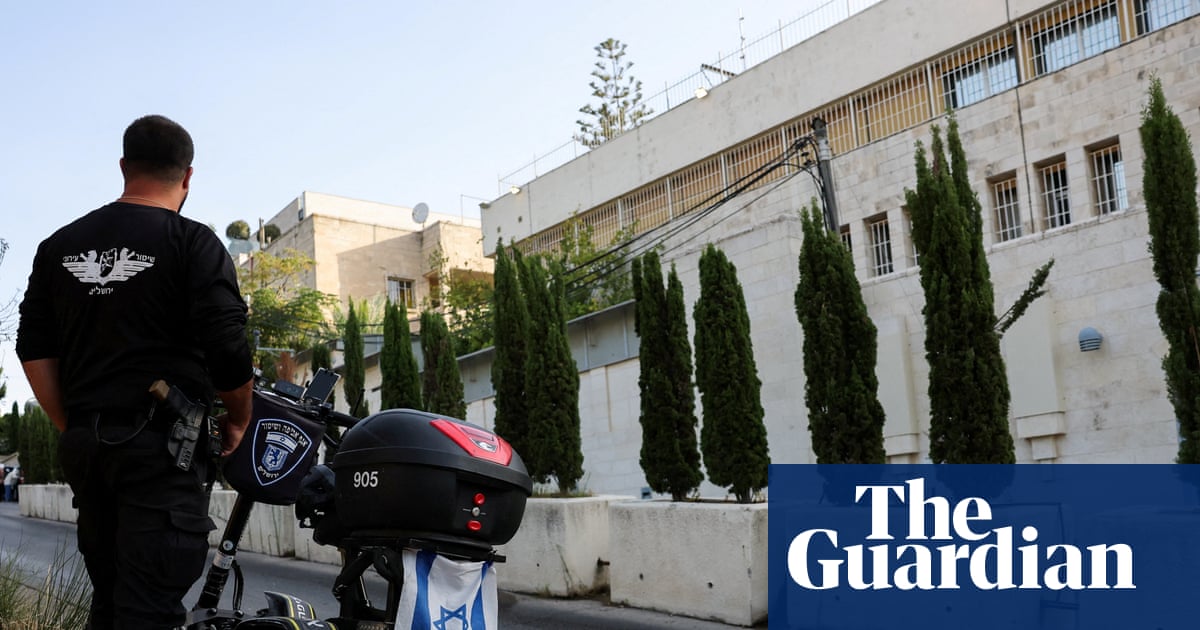

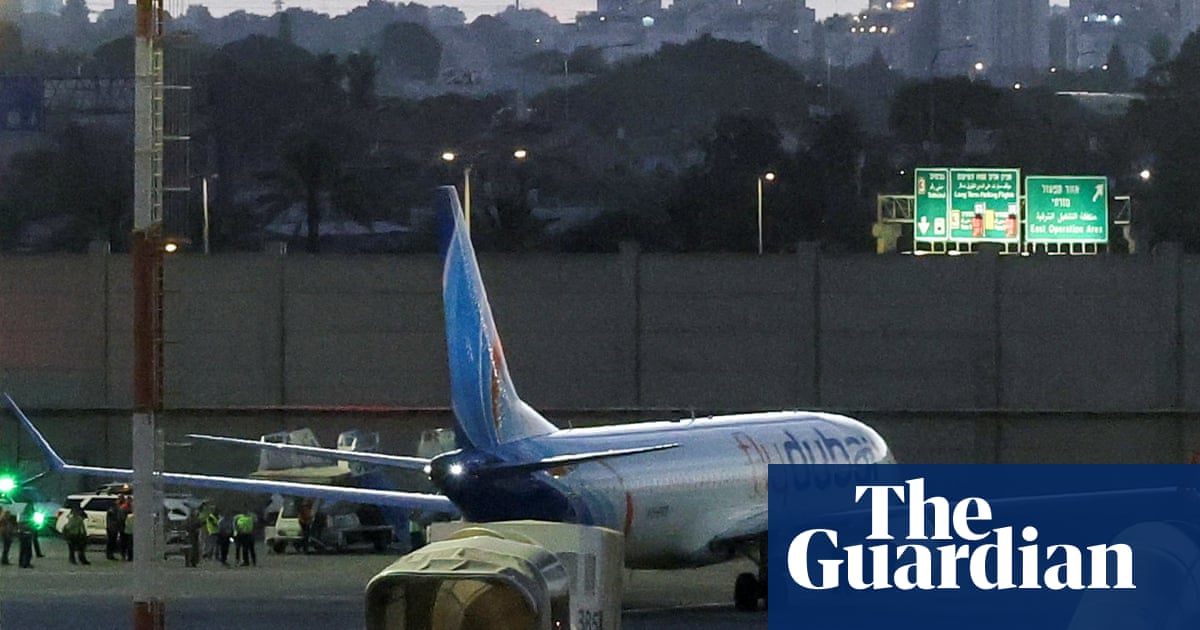
In today’s newsletter: When a passenger plane plunges 17,000ft amid claims of terrorism, hijacking, and geopolitical intrigue, Guardian journalists have to try and separate fact from fiction in real time.
Good morning. Shocking news of a cockpit stabbing. Graphic footage of bloodied crew members. Mid-air testimony from terrified passengers. This was the tenor of the heart-in-mouth reporting as the horrifying events unfolded onboard flight FZ 1073 to Tel Aviv: the early morning budget flight that plummeted 17,000ft in under two minutes before the courageous intervention of passengers and crew averted an apparent hijacking, potentially saving the lives of not just the 170+ passengers and crew on board, but many more.
This morning, speculation and conflicting reports are continuing to emerge about this dramatic incident in the sky above the most geopolitically sensitive region in the world. So how does the Guardian report a swiftly developing story engulfed in misinformation, as accurately and responsibly as possible? I spoke to the reporters, bloggers, and editors involved to find out.
Morning Headlines
- UK Politics: Ministers are working up sweeping plans for welfare changes including scrapping a key disability benefit for under-25s and replacing it with a multibillion-pound package of support to get into work.
- Northern Ireland: Talks aimed at resolving the Drumcree parade dispute have broken up without agreement, with Northern Ireland secretary Chris Bryant describing the situation as being between a “rock and a hard place.”
- US News: Tennessee’s governor has suspended all executions in the state and ordered an independent inquiry after a botched attempt to put a condemned inmate to death on Wednesday night.
- AI: When prompted, AI chat bots will edit images to remove the hijabs from Muslim women, a violation of one of the world’s most common and visible expressions of faith.
- Europe News: A fast-growing protest by high-school students over long hours, teacher shortages, and decaying facilities has escalated into “urban violence,” the French government has warned.
Incident Overview
International leaders have rushed to praise Smit Machchhar, the captain of flight FZ 1073. Bleeding heavily from multiple stab wounds, he somehow managed to release his cockpit door, allowing passengers and crew to gain entry and overpower his co-pilot turned assailant, an Omani national, who had attacked Machchhar in an apparent attempt to crash the plane. Other crew members were able to stabilize the flight and, just before 11am local time on Wednesday, the Boeing 737 Max made a safe emergency landing in Saudi Arabia. All 174 passengers on board escaped serious injury.
Yesterday, as internationally coordinated investigations continued, the attacker’s motives remained unknown. Israeli Prime Minister Benjamin Netanyahu told Fox News it was “too early to say” if there was any Iranian involvement, while claiming the co-pilot had previously undergone radical Islamist indoctrination and was suicidal. Other senior Israeli figures have been more vehement, with ambassador to the UN, Danny Danon, describing the incident as a “terror attack.” Two Israeli security sources later told Reuters that they had not yet found Iranian involvement.
Saudi investigators detained the co-pilot upon landing and are cooperating with the United Arab Emirates, the US, Oman, and Israel to determine his reasons and potential affiliations. William Christou, a Beirut-based reporter with the Guardian, tells me:
““They’re examining whether it’s a terror attack, whether it had any previous planning or prior direction, and if it could be a lone wolf attacker, who was perhaps motivated by anti-Israel hate, but wasn’t necessarily linked to any larger organisation or state.”
Reporting Challenges
William began drafting his initial report as soon as he woke up to news alerts about a potential hijacking. The Israeli government originally minimized the incident, describing it as a fight between pilots, while another early report suggested the plane had to land because of a fight between Ukrainian and Russian co-pilots.
““I was sifting through so much misinformation,” he says. “The story changed very quickly, and moment to moment.”
Back in the UK, Oliver Holmes was looking at flight trackers. Now based at Guardian HQ, Oliver has reported extensively across the Middle East. What I didn’t know until we spoke is that he once trained as a pilot, which has left him with an enduring interest in aerospace and aviation. Flight tracking websites have transformed how we report in-air incidents, he tells me.
““Before any government has made an announcement, these platforms can tell you something seriously wrong has happened.”
Flight tracking website Flightradar24 recorded the aircraft rapidly descending from its cruising altitude of about 34,000ft to 17,000ft in less than two minutes, just as it reached the Saudi-Jordanian border. Oliver suggests that investigators will look at whether this sudden and ferocious plunge was why the plane eventually landed with part of its tail missing.